





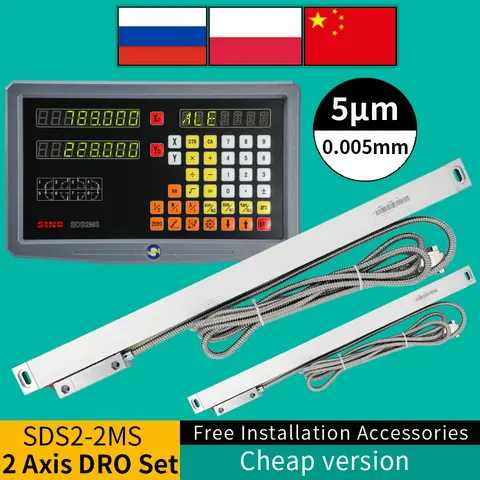


Results for lathe dro
Lathe dro is a versatile term associated with specialized industrial tools and accessories, particularly in machining and metalworking environments. While not a standard consumer product keyword, it often refers to components used in lathe operations—such as drop mechanisms, drop-in fixtures, or precision alignment tools—essential for enhancing accuracy and efficiency during turning, drilling, or shaping tasks. These tools are critical for both professional machinists and hobbyists working with CNC or manual lathes.
The combination of lathe and dro suggests a focus on precision and automation in workshop settings. Users searching for lathe dro are likely looking for reliable, durable DRO systems compatible with various lathe models, including those from brands like Haas, Bridgeport, or custom-built setups. These systems often feature high-resolution displays, magnetic or optical encoders, and compatibility with both metric and imperial units.
When selecting a DRO for your lathe, consider the following key parameters:
For users upgrading older lathes, a universal DRO kit with adjustable mounting brackets and plug-and-play wiring is highly recommended. Avoid low-cost models with poor calibration or inconsistent readings—these can lead to costly errors in precision work. Always verify the product’s measurement accuracy (typically ±0.001” or ±0.02mm) and repeatability before purchase.
In addition, consider brands with strong customer support and warranty coverage. Real-world user feedback often highlights the importance of stable signal transmission and resistance to electromagnetic interference, especially in industrial settings.
Whether you're working on custom metal parts, automotive components, or artistic metal sculptures, integrating a reliable DRO into your lathe setup significantly improves workflow efficiency and output quality. Prioritize precision, durability, and compatibility to ensure long-term performance and peace of mind in every machining project.
- Lathe
- A machine tool that rotates a workpiece on its axis to perform various operations such as cutting, sanding, knurling, drilling, or deformation, typically used in metalworking, woodworking, or plastic fabrication.
- DRO (Digital Readout)
- A digital display system used on machine tools to show precise measurements of tool position, travel, and depth, improving accuracy and reducing human error in machining processes.
The combination of lathe and dro suggests a focus on precision and automation in workshop settings. Users searching for lathe dro are likely looking for reliable, durable DRO systems compatible with various lathe models, including those from brands like Haas, Bridgeport, or custom-built setups. These systems often feature high-resolution displays, magnetic or optical encoders, and compatibility with both metric and imperial units.
When selecting a DRO for your lathe, consider the following key parameters:
- Encoder Type: Optical encoders offer higher accuracy and durability compared to magnetic types, especially in dusty or high-vibration environments.
- Display Size & Readability: Choose a DRO with a large, backlit screen for better visibility during long machining sessions.
- Compatibility: Ensure the DRO supports your lathe’s axis configuration (X, Z, or dual-axis) and has the correct mounting hardware.
- Power Source: Battery-powered units offer portability, while plug-in models provide continuous operation without battery replacement.
- Mounting & Installation: Look for kits that include clear instructions, alignment guides, and adjustable brackets to simplify setup.
For users upgrading older lathes, a universal DRO kit with adjustable mounting brackets and plug-and-play wiring is highly recommended. Avoid low-cost models with poor calibration or inconsistent readings—these can lead to costly errors in precision work. Always verify the product’s measurement accuracy (typically ±0.001” or ±0.02mm) and repeatability before purchase.
In addition, consider brands with strong customer support and warranty coverage. Real-world user feedback often highlights the importance of stable signal transmission and resistance to electromagnetic interference, especially in industrial settings.
Whether you're working on custom metal parts, automotive components, or artistic metal sculptures, integrating a reliable DRO into your lathe setup significantly improves workflow efficiency and output quality. Prioritize precision, durability, and compatibility to ensure long-term performance and peace of mind in every machining project.